

The basics of pool sanitation
Keeping a pool clean is about more than clear water. You need to kill bacteria and algae before they make anyone sick. Most people use chlorine tablets, but saltwater systems are now a common alternative. Both methods keep the water safe, just in different ways.
The basic principle behind pool sanitation is disinfection – killing or inactivating harmful microorganisms. Chlorine achieves this directly, while saltwater systems generate chlorine through a process called electrolysis. The Centers for Disease Control and Prevention (CDC) provides comprehensive guidelines for healthy swimming, emphasizing the importance of disinfectant levels, pH balance, and proper circulation. These guidelines apply to both chlorine and saltwater pools.
Chlorine products became the standard in the early 1900s. Saltwater systems arrived later as a hands-off option. Neither is perfect. Your choice depends on whether you want to save money upfront or save time on weekly chores.
Traditional chlorine setups
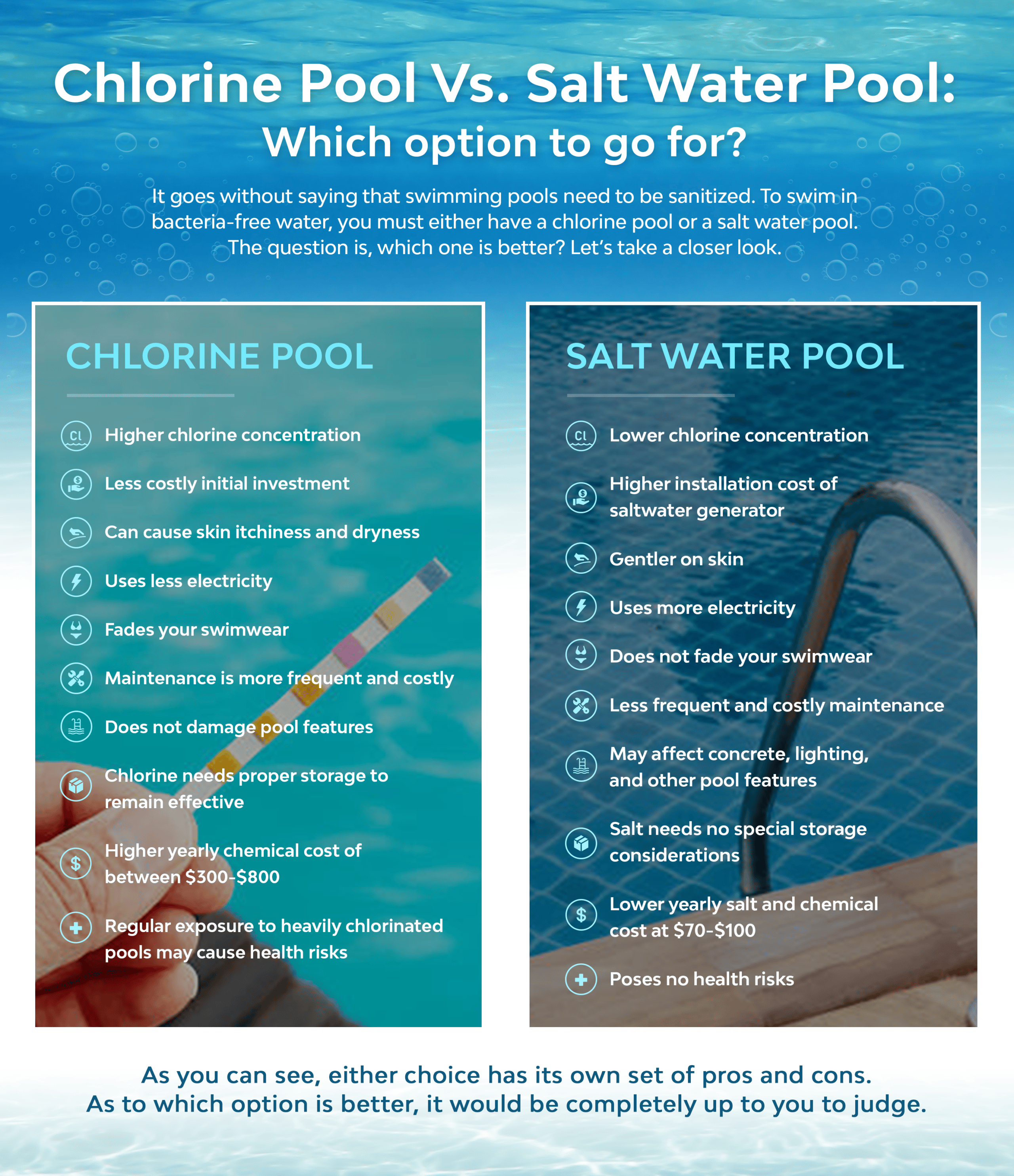
Traditional chlorine systems rely on adding chlorine directly to the pool water, either in the form of tablets, liquid, or granular chlorine. Chlorine works by oxidizing contaminants, effectively destroying bacteria and algae. It’s a highly effective sanitizing method when properly maintained, and it’s been the standard for pool sanitation for a long time.
There are several types of chlorine available. Tablets, typically trichlor or dichlor, are slow-releasing and convenient for consistent sanitation. Liquid chlorine, or sodium hypochlorite, is fast-acting and ideal for shock treatments. Granular chlorine, such as calcium hypochlorite, is another option for shock treatments and quick boosts in chlorine levels. Maintaining the correct chemical balance is critical, involving regular testing and adjustment of pH, alkalinity, calcium hardness, and cyanuric acid levels.
Chlorine systems have several pros. They are relatively inexpensive to set up and maintain, and chlorine is readily available. However, they also have drawbacks. Chlorine can cause skin and eye irritation, and it has a distinct odor. It requires frequent monitoring and adjustment of chemical levels, and improper handling can be dangerous. The resulting chloramines, byproducts of chlorine reacting with organic matter, are often responsible for the unpleasant smell and irritation associated with chlorine pools.
The cost of chlorine varies depending on the type and quantity purchased, but a typical 10lb bucket of chlorine tablets can range from $20 to $40. Liquid chlorine is often sold by the gallon, with prices around $5 to $10 per gallon. Ongoing costs include regular testing kits, pH adjusters, and potentially algaecides. While the upfront cost is lower, the consistent need for chemical purchases adds up over time.
How saltwater chlorinators work
Despite the name, saltwater pools are not chlorine-free. They utilize a process called salt chlorination, where a salt chlorine generator (or salt cell) converts dissolved salt (sodium chloride) into chlorine through electrolysis. This means the pool still relies on chlorine for sanitation, but it’s generated on-site rather than added directly.
Here’s how it works: pool water passes through the salt cell, which contains titanium plates coated with precious metals. When an electric current is applied, the salt (typically added at a concentration of around 3,000-4,000 ppm) is broken down into chlorine, hydrogen, and sodium hydroxide. The chlorine sanitizes the pool, and then recombines with sodium to form salt again, creating a continuous cycle.
People often think saltwater pools are chemical-free. They aren't. The system creates the same chlorine you'd buy in a bucket. However, because the generator adds it steadily, you get fewer chloramines—the byproducts that make your eyes sting and create 그 'pool smell.' It feels softer on the skin, but it's still a chlorine pool.
The initial cost of a saltwater system is higher than a traditional chlorine system, typically ranging from $1,000 to $3,000 for the salt cell and control unit, plus installation. Ongoing costs include the price of salt (a 40lb bag typically costs $20-$30) and electricity to power the salt cell. The salt cell itself needs to be replaced every 3-7 years, depending on usage and water chemistry.
Maintenance Schedules: Side-by-Side
Effective pool maintenance is crucial for both chlorine and saltwater systems, but the specific tasks and frequency differ. Here's a detailed comparison, referencing guidance from the Wisconsin Department of Agriculture, Trade and Consumer Protection (DATCP) regarding pool safety and water quality standards.
Weekly Maintenance: For chlorine pools, this includes testing and adjusting chlorine, pH, and alkalinity levels. Shocking the pool may also be necessary. Saltwater pools require testing salt levels, pH, and cyanuric acid. Visually inspecting the salt cell for scale buildup is also important. Both systems require skimming the surface for debris and vacuuming the pool floor.
Monthly Maintenance: Chlorine pools benefit from a thorough chemical balancing, including testing calcium hardness and stabilizer levels. Saltwater pools require cleaning or backwashing the filter and inspecting the salt cell for any signs of corrosion. Filter cleaning is vital for both systems to maintain proper water circulation.
Seasonal Maintenance (Opening/Closing): Both systems require a complete drain and clean, inspection of equipment, and winterization procedures in colder climates. Saltwater systems may need the salt cell removed and stored properly for the winter. DATCP emphasizes the importance of proper winterization to prevent damage and ensure a safe reopening in the spring.
Chlorine vs. Saltwater Pool Maintenance Comparison - 2026
| Task | Chlorine Pool | Saltwater Pool | Estimated Time |
|---|---|---|---|
| Test Water Chemistry | 3-5 times per week. Requires testing for pH, chlorine levels, alkalinity, and stabilizer. | 1-2 times per week. Focus on pH, salt levels, and alkalinity. Chlorine generation is automated. | 30-60 minutes |
| Shocking the Pool | Weekly or after heavy use/rain. Typically requires manual addition of shock treatment. | Less frequent, typically every 2-4 weeks, or as needed based on testing. May still require supplemental shocking. | 30-60 minutes |
| Cleaning the Filter | Every 2-6 weeks, depending on usage and filter type (sand, cartridge, DE). | Every 3-6 months, depending on usage and filter type. Saltwater systems can sometimes lead to scale buildup. | 60-120 minutes |
| Algae Prevention | Regular algaecide application is often needed, especially during warmer months. | Generally less prone to algae due to consistent chlorine production, but preventative measures may still be needed. | 15-30 minutes (as part of routine chemical checks) |
| Salt Cell Maintenance (Saltwater Only) | N/A | Annual inspection and potential cleaning of the salt cell to remove calcium buildup. Cell life varies based on water chemistry and usage. | 30-90 minutes |
| Winterizing | Complete drain and chemical treatment. Requires careful storage of chemicals. | May require partial drain and specific winterizing chemicals. Salt cell may need removal and storage. | 2-4 hours |
| Cyanuric Acid (Stabilizer) Adjustment | Regular monitoring and adjustment needed to protect chlorine from sunlight. Frequent additions are common. | Less frequent adjustment needed as chlorine is generated continuously. | 30-60 minutes (when needed) |
Illustrative comparison based on the article research brief. Verify current pricing, limits, and product details in the official docs before relying on it.
Cost Breakdown: Long-Term Ownership
Determining the most cost-effective system requires considering both upfront and ongoing expenses. Chlorine systems generally have lower initial costs, with equipment ranging from $100 to $500, plus installation if needed. Ongoing costs include chlorine, test kits, pH adjusters, and algaecides – typically $100 to $300 per year, depending on pool size and usage.
Saltwater systems, as previously mentioned, have a higher initial investment, ranging from $1,000 to $3,000 for the salt cell and control unit, plus installation. Ongoing costs include salt, electricity for the salt cell, and eventual salt cell replacement (every 3-7 years). Electricity costs can vary significantly based on local rates and cell usage, but typically add $50 to $200 per year.
Here’s a rough breakdown over a 10-year period:
* Chlorine System: $1,000 - $3,000 (equipment + installation) + $1,000 - $3,000 (ongoing chemicals) = $2,000 - $6,000
* Saltwater System: $2,000 - $4,000 (equipment + installation) + $500 - $2,000 (ongoing salt & electricity) + $300 - $1,000 (salt cell replacement) = $2,800 - $7,000
Essential Saltwater and Chlorine Pool Maintenance Gear for 2026

Tests for Bromine, Chlorine, pH, Alkalinity, and Hardness · Provides quick and easy water testing · Comes with 50 strips for multiple uses
These test strips offer a comprehensive and convenient way to monitor key water chemistry parameters, essential for maintaining a balanced pool.

Generates chlorine from salt · Suitable for in-ground pools up to 40,000 gallons · Automates chlorine production for consistent sanitation
The AquaRite system provides an automated and efficient method for saltwater pools, converting salt into chlorine to keep the water clean and clear.

Dispenses chlorine tablets automatically · Holds up to 9 lbs of chlorine · Designed for in-line installation
This automatic feeder ensures a steady supply of chlorine from tablets, simplifying maintenance for traditional chlorine pools.

Digital tester for 7 parameters · Measures chlorine, pH, and salinity · Suitable for swimming pools, hot tubs, and aquariums
This digital tester provides precise readings for multiple water parameters, including salinity for saltwater pools, offering a modern approach to water testing.

Replacement salt cell for chlorination · Designed for Hayward AquaRite systems · Effective for pools up to 40,000 gallons
The TurboCell is a critical component for saltwater chlorination systems, ensuring the continuous generation of sanitizer for optimal pool hygiene.
As an Amazon Associate I earn from qualifying purchases. Prices may vary.
Skin irritation and eye sting
The claim that saltwater pools are gentler on skin and eyes is often made, and there's some truth to it. The primary culprit for irritation in traditional chlorine pools is chloramines, formed when chlorine combines with organic matter like sweat, urine, and body oils. Saltwater systems, by generating chlorine continuously, tend to produce fewer chloramines.
However, it’s crucial to remember that the chlorine produced in a saltwater system is chemically the same as that added directly to a traditional pool. If chlorine levels are too high, or if the pH is imbalanced, saltwater pools can still cause irritation. Proper maintenance is key to minimizing these issues.
The CDC’s guidelines on healthy swimming emphasize the importance of maintaining proper disinfectant levels (regardless of the system) and practicing good hygiene. This includes showering before swimming, avoiding swallowing pool water, and taking breaks to ensure swimmers stay hydrated. Both chlorine and saltwater pools require diligent maintenance to protect swimmer health.
2026 Trends: Innovations to Watch
The future of pool sanitation is leaning towards more automated and environmentally friendly solutions. UV (ultraviolet) sanitizers are gaining popularity as a supplemental method, using UV light to kill bacteria and algae without adding chemicals. Ozone generators offer a similar benefit, oxidizing contaminants and reducing the need for chlorine.
Automated chemical controllers are becoming increasingly sophisticated, constantly monitoring water chemistry and automatically adjusting chemical levels. These systems can significantly simplify maintenance and ensure consistent water quality. The rise of "smart" pool systems, integrated with mobile apps and remote control capabilities, is also a notable trend.
While these technologies offer promising advancements, it’s important to note that they often come with a higher price tag. Their long-term effectiveness and cost savings will continue to be evaluated as the industry evolves.
Chlorine vs. Saltwater: Which Pool System is Right for You?
Choosing between a chlorine and saltwater pool system is a big decision! This short quiz will help you determine which option best fits your lifestyle, budget, and maintenance preferences. Answer the following questions honestly to receive a personalized recommendation.

No comments yet. Be the first to share your thoughts!