

A realistic timeline
Opening the pool too fast usually leads to broken pipes or a green mess that takes weeks to clear. I've found that taking two days to inspect the hardware is better than rushing to get the cover off.
A well-executed pool opening typically takes a full day, maybe two depending on the size of your pool and the extent of winterization. As we head into spring 2026, keep in mind that regional weather patterns will still dictate the ideal timing. Warmer climates, like those in the Southeast, will likely be opening pools in March, while those in the Midwest and Northeast may be looking at April or even May.
I’m not sure about any sweeping new regulations for 2026, but it’s always a good idea to check with your local municipality for any updates regarding pool safety codes or chemical usage restrictions. One thing I’ve noticed recently is an increase in the availability of more eco-friendly pool cleaning products, which might be something pool owners are actively seeking out this year. Prioritize a thorough inspection, and don't underestimate the time commitment involved.
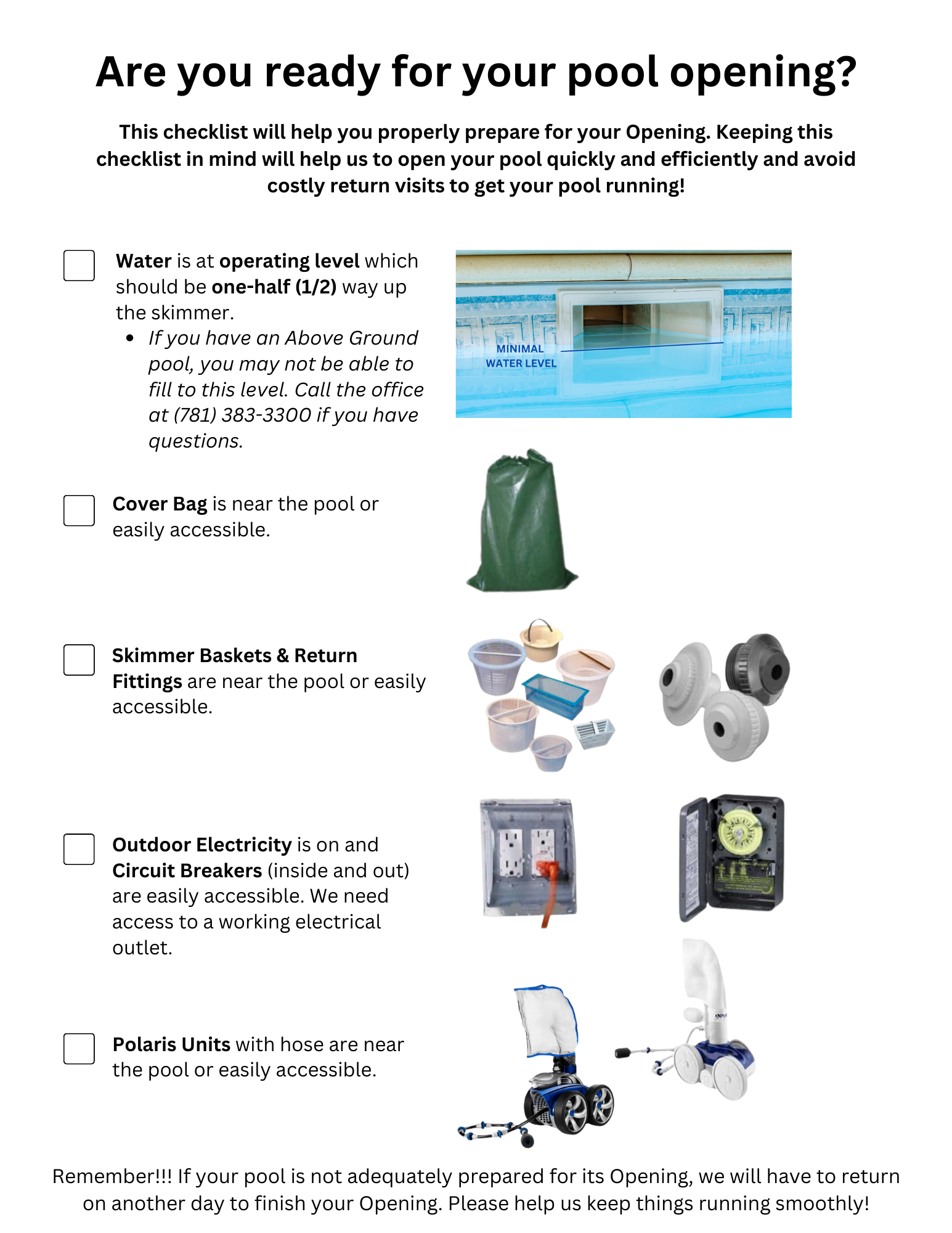
The initial inspection
Before you even think about removing the cover or touching any equipment, safety has to be your top priority. A comprehensive inspection is crucial. Start with the pool structure itself. Look for any new cracks in the plaster, vinyl liner, or concrete shell. Also, carefully examine the surrounding deck for shifting or damage that could create a tripping hazard.
Next, move onto the equipment. Inspect the pump, filter, and heater for any signs of corrosion, leaks, or damage. Check the pump lid for cracks and ensure it seals tightly. Examine the filter tank for bulges or cracks, and inspect the filter media (sand, cartridge, or DE) for wear and tear. Don't forget the electrical components; verify that all grounding connections are secure and that GFCI outlets are functioning correctly.
I've seen too many pools where owners assumed everything was okay after winterizing, only to discover significant structural damage once the pool was filled. A little preventative investigation now can save you a lot of money and headaches later. Don’t assume anything – a careful, methodical inspection is the foundation of a successful pool opening.
- Check the shell and deck for winter cracks
- Inspect pump, filter, and heater for corrosion or leaks.
- Verify grounding connections and GFCI outlet function.
- Examine filter media for wear and tear.
- Inspect pump lid for cracks and a tight seal.
Cover Removal and Cleaning
Removing the pool cover requires a bit of care to avoid damaging either the cover or the pool itself. The process varies slightly depending on the type of cover you have. Winter covers, typically made of heavy-duty vinyl or polyethylene, need to be carefully pulled off, often with the help of a second person. Solar covers, which are lighter and more flexible, can usually be rolled up and removed by one person.
Once the cover is off, it's time to clean it. A pressure washer can be effective for removing dirt and debris, but use a low-pressure setting to avoid damaging the material. Alternatively, you can scrub the cover with a mild detergent and a brush. Thoroughly rinse the cover and allow it to dry completely before storing it.
I always recommend a thorough cleaning before storing the cover. Mildew and algae can quickly grow on a damp cover, shortening its lifespan. Store the cover in a dry, well-ventilated area, away from direct sunlight. A dedicated cover storage bag or container is a good investment.
Debris Removal and Initial Vacuuming
With the cover removed, you’ll likely find a collection of leaves, branches, and other debris in the pool. Use a leaf net or skimmer to remove as much of the larger debris as possible. A robotic pool cleaner can also be helpful for this task, but it’s best to remove the bulk of the debris first to prevent it from overloading the cleaner’s filter.
Initial vacuuming is best done on the "waste" setting, bypassing the filter. This prevents the filter from becoming clogged with a large amount of debris all at once. Vacuum slowly and methodically, focusing on areas where debris has accumulated. Once the majority of the debris is removed, you can switch the filter back to its normal setting.
Removing large debris before starting the pump is essential. Otherwise, you risk damaging the pump impeller or clogging the filter, leading to reduced water flow and potential equipment failure. A little extra effort upfront will save you a lot of trouble later.
Filter and Pump Startup
Now it’s time to bring the pool’s circulation system back to life. First, check the water level in the filter tank and add water if necessary. Lubricate the pump lid O-ring with a silicone-based lubricant to ensure a watertight seal. Then, prime the pump by filling it with water. This is especially important if the pump has been dry over the winter.
Once the pump is primed, turn on the power. Listen carefully for any unusual noises, such as grinding or rattling. Check for leaks around the pump, filter, and plumbing connections. Monitor the water flow and pressure gauge to ensure everything is operating within normal ranges.
Don't just turn it on and walk away! I’ve seen pumps burn out within minutes because of a lack of priming or a blockage in the suction line. A few minutes of careful observation during startup can prevent a costly repair. If you notice any problems, turn off the power immediately and consult a pool professional.
- Check filter water level and add if needed.
- Lubricate pump lid O-ring.
- Prime the pump with water.
- Turn on the power and listen for unusual noises.
- Check for leaks and monitor water flow/pressure.
Balancing the water
Proper water chemistry is the cornerstone of a healthy and enjoyable pool. It's not just about killing bacteria; it's about protecting your equipment, preventing staining, and ensuring swimmer comfort. The ideal ranges for key parameters are: pH (7.2-7.8), alkalinity (80-120 ppm), calcium hardness (200-400 ppm), and sanitizer levels (chlorine 1-3 ppm, bromine 3-5 ppm, salt 2700-3400 ppm).
Testing your water is the first step. You can use a liquid test kit, test strips, or a digital water tester. While test kits and strips are affordable, digital testers are generally more accurate and easier to read. In The Swim's spring chemical guide emphasizes the importance of testing before adding any chemicals. I always recommend taking a water sample to a local pool store for professional testing, even if you do it yourself – it provides a valuable second opinion.
When adding chemicals, always follow the manufacturer’s instructions carefully. Add chemicals one at a time, allowing each to circulate and dissolve before adding the next. The general order for adding chemicals is: adjust alkalinity first, then pH, then calcium hardness, and finally sanitizer. Never mix different chemicals together, as this can create dangerous reactions.
Understanding cyanuric acid (stabilizer) is also important. It protects chlorine from being broken down by sunlight, but too much can reduce chlorine’s effectiveness. Maintain a level of 30-50 ppm. Pay attention to phosphate levels as well; high phosphates can fuel algae growth. Addressing these less-obvious factors can make a significant difference in water clarity and maintenance requirements.
Water Chemistry Troubleshooting for Newly Opened Pools
| Problem | Possible Causes | Recommended Actions |
|---|---|---|
| Cloudy Water | Imbalance in pH, alkalinity, or calcium hardness; Filter not functioning effectively; Recent heavy rainfall | Test and adjust water chemistry. Backwash or clean the filter. Consider a clarifier. |
| Algae Growth (Green) | Insufficient sanitizer levels; Poor circulation; High phosphate levels | Shock the pool with a high dose of chlorine. Brush the pool surfaces thoroughly. Test and balance water chemistry. Consider an algaecide. |
| Algae Growth (Black) | Often indicates a lack of consistent sanitation; Can be difficult to eradicate | Aggressive brushing, superchlorination (shocking), and potentially a specialized black algae algaecide are required. Professional assistance may be needed. |
| Scaling on Pool Surfaces | High calcium hardness; High pH; Poor water circulation | Test and adjust water chemistry, focusing on pH and calcium hardness. Consider a scale remover. Improve water circulation. |
| Low pH (Acidic Water) | Rainfall; Acidic pool surfaces; Introduction of acidic materials | Add pH increaser (soda ash) gradually, testing frequently. Monitor alkalinity levels as pH adjustment can affect it. |
| High pH (Basic Water) | Use of alkaline chemicals; Mineral content in water | Add pH decreaser (muriatic acid or dry acid) gradually, testing frequently. Follow product instructions carefully. |
| Low Sanitizer Levels | Sunlight degradation; High bather load; Inadequate circulation | Test and adjust sanitizer levels (chlorine, bromine, etc.). Shock the pool if necessary. Ensure proper circulation. |
| Unbalanced Alkalinity | Improper pH adjustment; Introduction of new water | Test and adjust alkalinity levels using alkalinity increaser (baking soda) or pH decreaser, depending on the current reading. |
Illustrative comparison based on the article research brief. Verify current pricing, limits, and product details in the official docs before relying on it.
Shocking the Pool: A Deep Clean
Shocking the pool, also known as superchlorination, is a crucial step in the opening process. It’s designed to kill any bacteria, algae, or contaminants that may have accumulated over the winter. There are several types of shock available, including calcium hypochlorite, dichlor, and non-chlorine shock.
Calcium hypochlorite is the most common and affordable option, but it can increase calcium hardness levels. Dichlor is more expensive but doesn’t affect calcium hardness. Non-chlorine shock, typically potassium monopersulfate, is a good choice for pools with sensitive surfaces or those who prefer not to use chlorine.
To shock the pool, follow the dosage instructions on the product label. Typically, you'll need to add a higher concentration of sanitizer than usual. Run the pump overnight to allow the shock to circulate and dissipate. Avoid swimming until the sanitizer levels return to normal. Shocking is often skipped, but it’s a critical step for a truly clean start to the season.
No comments yet. Be the first to share your thoughts!