

Pool Tech: 2026 Efficiency Outlook
Pool owners are increasingly seeking energy-efficient options. Rising energy costs, environmental concerns, and stricter regulations are driving this trend. The goal is to enjoy a pool without excessive utility bills or environmental impact.
The focus has shifted from initial purchase price to long-term operating costs. Homeowners now prioritize systems that reduce energy use and their carbon footprint, spurring innovation in the industry.
The initial investment for energy-efficient equipment can be a barrier. Homeowners must balance cost with performance and explore available incentives and options.
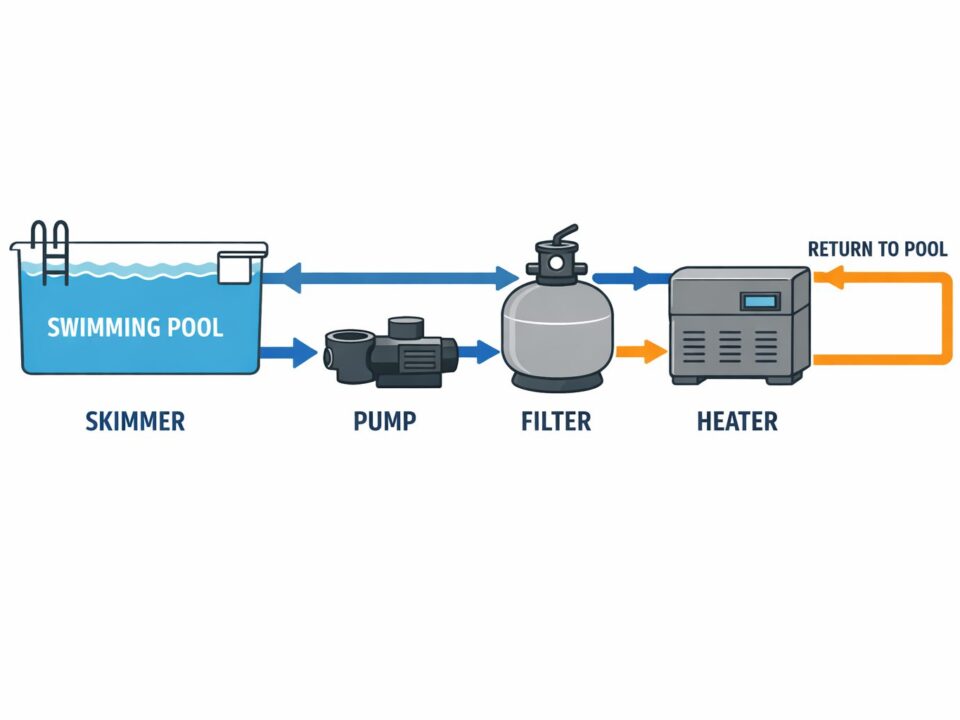
Heat Pumps: The Rising Standard
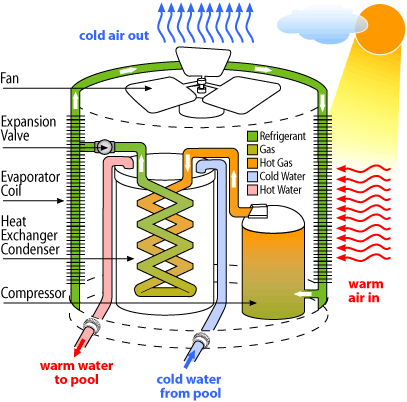
Heat pumps are a popular choice for pool heating. Instead of generating heat like gas heaters, they transfer it from the surrounding air, water, or ground. This method is much more efficient, typically providing three to six times more heat energy than the electricity used.
Heat pump efficiency is measured by Coefficient of Performance (COP) and Seasonal Energy Efficiency Ratio (SEER), with higher numbers indicating greater efficiency. Types include air-source (most common, draws heat from air), geothermal (uses earth's consistent temperature), and water-source (uses a nearby water body).
Air-source heat pumps perform less effectively as air temperatures drop, making them less ideal for colder climates. Using a well-insulated pool and a pool cover can help. Proper installation requires adequate clearance for airflow, and regular air filter cleaning is necessary for efficiency.
Maintenance includes cleaning coils and checking refrigerant levels, with annual professional servicing recommended. While the upfront cost exceeds that of a gas heater, long-term energy savings, especially with rising gas prices, can offset this. A well-maintained heat pump can last 10-20 years.
- Air-Source Heat Pumps: Most common, draws heat from the air.
- Geothermal Heat Pumps: Most efficient, utilizes the earth’s constant temperature.
- Water-Source Heat Pumps: Uses a nearby body of water as a heat source.
Heat Pump Technology Comparison - 2026 Trends
| Initial Cost | Efficiency (COP/SEER Range) | Climate Suitability | Installation Complexity | Maintenance Needs |
|---|---|---|---|---|
| Generally highest upfront investment | COP: 3.5 - 6.0; SEER: 8-12 (can be higher with newer models) | Effective in moderate to warm climates. Performance decreases significantly in consistently cold temperatures (below 50°F). | Moderate - Requires dedicated electrical circuit and professional refrigerant handling. | Regular filter cleaning and periodic professional inspection of refrigerant levels are needed. |
| Moderate upfront investment | COP: 4.0 - 5.5; SEER: 9-11 | Suitable for a wider range of climates than air-source, including areas with cooler winters, due to ground temperature stability. | High - Requires ground loop installation (horizontal or vertical), which is labor-intensive and may require excavation. | Requires periodic loop fluid checks and professional maintenance. Generally very reliable with minimal issues. |
| Lower upfront investment compared to geothermal | COP: 3.0 - 5.0; SEER: 8-10 | Best suited for locations with readily available water source (e.g., well, lake, pond) with consistent temperature. | Moderate to High - Requires access to a water source and a closed-loop system to prevent contamination. | Requires regular monitoring of water quality and potential biofouling prevention. Professional inspection of the heat exchanger is recommended. |
| Moderate | COP: 3.5 - 5.5; SEER: 9-11 | Best in warmer climates, but advancements are making them more viable in moderate climates with proper sizing and backup heating. | Moderate - Similar to air-source, requiring electrical connections and proper ventilation. | Similar to air-source: filter cleaning, professional refrigerant checks. |
Illustrative comparison based on the article research brief. Verify current pricing, limits, and product details in the official docs before relying on it.
Solar Pool Heating: Beyond the Panels
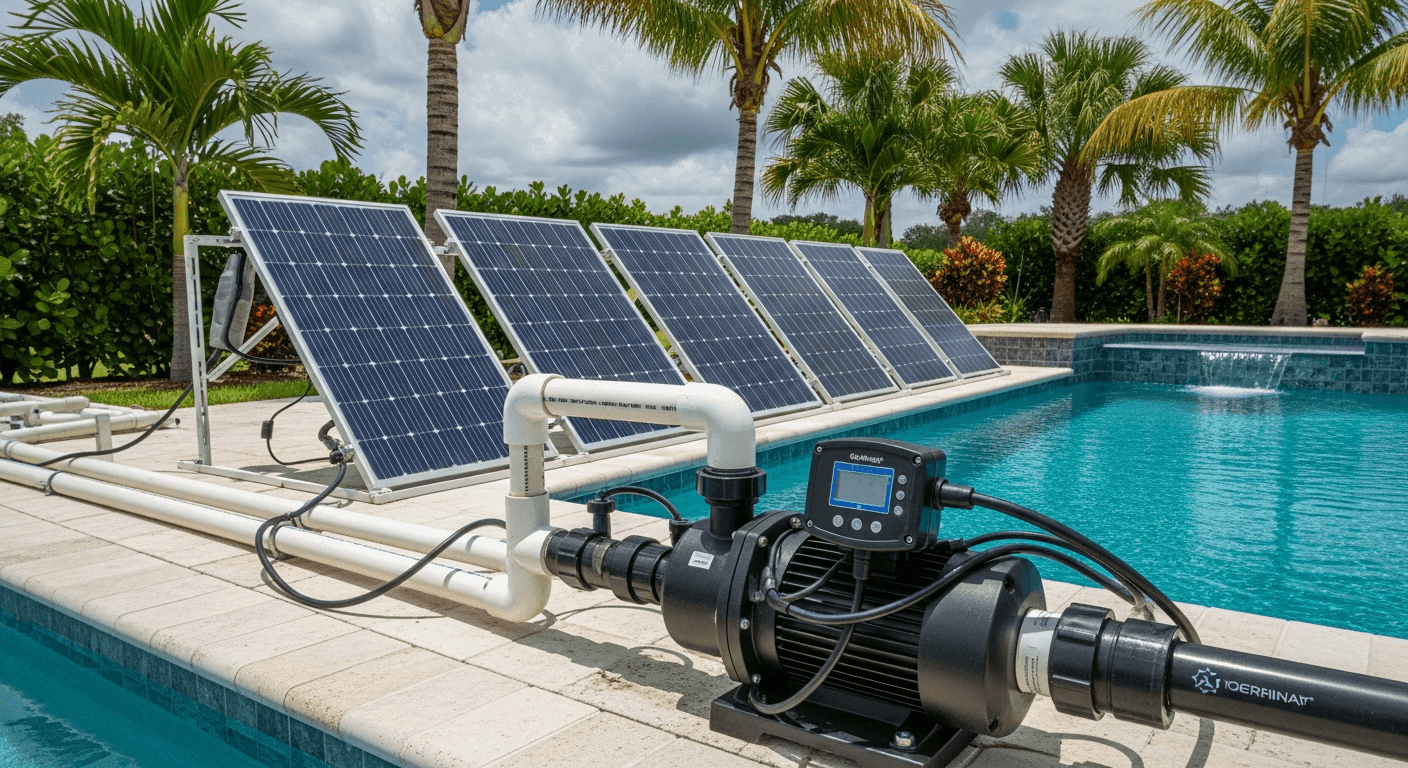
Solar pool heating systems use the sun's energy to warm pool water. They involve solar collectors on a roof or rack and a pump to circulate water through them, absorbing solar heat before returning it to the pool.
Unglazed collectors are cheaper and work best in warm climates, while glazed collectors are better for cooler regions and can heat on cloudy days. Proper sizing of the collector array for your pool size and climate is essential.
Benefits include free solar energy, a lower carbon footprint, and cost savings. However, performance depends on weather, and collector space requirements are a factor. Integration with existing systems is usually simple but may need plumbing adjustments.
New solar panel technology is improving efficiency and reducing system size, making solar heating more viable for various climates and pool sizes.
Variable Speed Pumps: A Quiet Revolution
Variable speed pumps offer advanced pool circulation. Unlike single-speed pumps that run constantly at high speed, variable speed pumps allow you to adjust the speed based on your pool's needs.
Running the pump at lower speeds for longer periods significantly reduces electricity consumption while maintaining filtration and circulation. Programmable settings allow customization for different times or activities.
Variable speed pumps operate more quietly than single-speed models. While their initial cost is higher, the energy savings usually justify the investment, with payback periods varying based on local rates and usage.
Maximizing benefits requires proper programming. Experiment with settings to balance energy savings and circulation, or consult a pool professional for guidance tailored to your pool and climate.
Smart Pool Automation: Control at Your Fingertips
Smart pool automation systems offer precise, remote control of pool equipment like pumps, heaters, and lights via an internet connection. Automated scheduling optimizes energy usage by setting specific run times.
Many smart systems include leak detection, monitoring water levels and flow rates to alert you to potential issues. Integration with smart home ecosystems like Amazon Alexa and Google Home enables voice control.
Consider the security of connected systems. Use strong passwords and encryption, and choose reputable brands with strong security track records.
Costs vary by features and complexity, but energy savings, reduced maintenance, and convenience can make smart automation a worthwhile investment. Prioritize systems that are easy to install and use, with good customer support.
Content is being updated. Check back soon.
Pool Design for Efficiency: Minimizing Heat Loss
Pool design affects energy efficiency. Pool covers are highly effective at reducing heat loss; solar covers trap heat and prevent evaporation, while automatic covers offer enhanced protection and convenience. A well-fitted cover can cut heat loss by up to 70%.
Pool shape and orientation matter. Maximizing sun exposure captures more solar energy, while avoiding windy areas reduces evaporation and heat loss. Landscaping can provide shade and act as windbreaks.
Pool finish color impacts energy efficiency. Darker finishes absorb more heat, useful in cooler climates, while lighter finishes reflect sunlight, keeping pools cooler in warmer climates. Choose based on your climate and preferences.
Insulating the pool shell reduces heat loss, especially in colder climates. This is usually done during new construction but is worth considering for renovations. These design choices contribute to a more energy-efficient and enjoyable pool.
- Solar Covers: Trap heat and reduce evaporation.
- Automatic Covers: Provide superior heat retention and convenience.
- Strategic Landscaping: Offers shade and wind protection.
Pool Efficiency Checklist
- Pool Cover Usage - Is your pool covered when not in use? Covers significantly reduce water evaporation, minimizing heat loss and the need to refill, and reducing chemical consumption.
- Variable Speed Pumps - Is your pump running at the optimal speed? Variable speed pumps, like those from Pentair or Hayward, allow you to customize pump speed for different tasks, saving substantial energy compared to single-speed pumps.
- LED Lighting - Are your pool lights energy-efficient LEDs? LED pool lights consume up to 80% less energy than traditional halogen bulbs and have a much longer lifespan.
- Heat Pump Efficiency - If using a heat pump, is it appropriately sized for your pool and climate? Properly sized heat pumps from brands like Raypak offer a more energy-efficient alternative to gas heaters.
- Solar Heating System - Do you have a solar pool heating system? Solar systems utilize the sun’s energy to heat your pool, drastically reducing reliance on electricity or gas.
- Recent Pool Inspection - Have you had a recent pool inspection? A professional inspection can identify leaks, equipment malfunctions, and inefficiencies impacting energy use.
- Filter Type - What type of filter are you using? Cartridge filters generally require less backwashing than sand filters, conserving water and energy.
- Automation System - Do you utilize a pool automation system? Systems from companies like Jandy allow for precise control of pumps, heaters, and lights, optimizing energy usage.
Incentives and Rebates: Lowering the Cost
Incentives and rebates can help offset the cost of energy-efficient pool equipment. The federal government provides tax credits for upgrades like qualified pool pumps and heaters, and many states and local utilities offer their own rebates.
The Database of State Incentives for Renewables &
Don’t overlook manufacturer rebates. Many manufacturers offer rebates on their energy-efficient products. These rebates can often be combined with federal and state incentives, further reducing the overall cost. Take the time to research all available options before making a purchase.
Someone built an OpenClaw agent that sells pool installation on autopilot.
— mitsuri (@0xmitsurii) April 13, 2026
Finds $500-$1.2M homes without pools. Renders a pool in their backyard and mails a before and after postcard. pic.twitter.com/blsW4Gjb7n
No comments yet. Be the first to share your thoughts!