

Understanding the Critical Importance of Pool Inspections in 2024
As we navigate through 2024, swimming pool safety has never been more crucial. With updated regulations from the CDC's Model Aquatic Health Code (MAHC) 2024 Edition and the Uniform Swimming Pool, Spa, and Hot Tub Code (USPSHTC), pool owners must stay informed about evolving safety standards. A comprehensive pool inspection serves as your first line of defense against potential hazards, ensuring your aquatic facility meets all current safety requirements.
Professional pool inspection has evolved significantly, incorporating new safety protocols that address emerging risks and technological advances. The latest MAHC updates, released in December 2024, introduce stricter guidelines that directly impact how pools are inspected and maintained. These changes aren't just bureaucratic updates—they represent lessons learned from real-world incidents and ongoing research into aquatic safety.
Key Safety Standards Driving 2024 Pool Inspections
The foundation of any thorough swimming pool inspection rests on understanding current safety standards. The 2024 MAHC edition has introduced several critical updates that inspection professionals now prioritize. Most notably, portable slides are now completely prohibited due to safety concerns regarding inconsistent water depth, inadequate landing areas, and insufficient clear spaces around slide exits.
For spa owners, new visibility requirements mandate that clocks must be clearly visible to all bathers—a seemingly simple requirement that addresses serious health risks associated with prolonged hot water exposure. Additionally, single pass splash pads now fall under specific interactive water play venue regulations, requiring adherence to enhanced design, construction, operation, and maintenance standards.
These regulatory changes reflect a broader shift toward proactive safety management. Pool safety standards now emphasize prevention over reaction, requiring owners to anticipate potential hazards before they manifest. This approach has transformed how aquatic inspections are conducted, moving beyond simple compliance checks to comprehensive risk assessments.
The Evolution of Professional Pool Inspection Protocols
Modern pool inspection protocols have expanded far beyond traditional water testing and equipment checks. Today's comprehensive inspections incorporate structural integrity assessments, electrical safety evaluations, and detailed reviews of safety equipment placement and functionality. The integration of new technologies, including digital testing equipment and drone-assisted structural assessments, has revolutionized how thorough inspections can be.
Professional inspectors now utilize advanced testing methods to evaluate water circulation patterns, ensuring proper filtration and chemical distribution throughout the entire pool system. This level of detail was previously impossible with conventional inspection methods but has become standard practice as we better understand the relationship between water quality and bather safety.

The inspection process also now includes detailed documentation requirements that serve multiple purposes. Beyond regulatory compliance, these records provide valuable data for predictive maintenance, helping pool owners identify potential issues before they become safety hazards or costly repairs.
Understanding Your Role as a Pool Owner
While professional inspections are essential, pool owners play a crucial role in maintaining safety standards between formal inspections. Understanding what inspectors look for helps owners conduct meaningful self-assessments and identify when professional intervention is necessary.
The most effective pool safety programs combine regular professional inspections with ongoing owner vigilance. This collaborative approach ensures that safety standards are maintained consistently, not just during formal inspection periods. Pool owners who understand inspection criteria are better equipped to maintain their facilities and communicate effectively with inspection professionals.
Regular monitoring also helps pool owners budget effectively for maintenance and repairs. By understanding what inspectors evaluate, owners can prioritize maintenance activities and address minor issues before they escalate into major safety concerns or compliance violations.
The investment in proper pool inspection and maintenance extends far beyond regulatory compliance. It protects the health and safety of everyone who uses your pool while preserving the long-term value of your aquatic investment. As we'll explore in Part 2 of this guide, implementing a systematic approach to pool inspection can transform pool ownership from a constant worry into confident enjoyment of your aquatic facility.
Comprehensive Pool Inspection Checklist for 2024
Following the updated safety standards and regulations, this comprehensive checklist ensures your pool meets all current requirements. Regular professional pool inspection using this framework helps maintain compliance with the latest MAHC guidelines and prevents costly violations.
Structural and Equipment Safety Standards
The 2024 MAHC updates have introduced stricter requirements for pool equipment and structural elements. Pool safety standards now mandate specific protocols for slide installations, with portable slides completely prohibited due to safety concerns. During your swimming pool inspection, verify that all permanent slides meet current depth and clearance requirements.
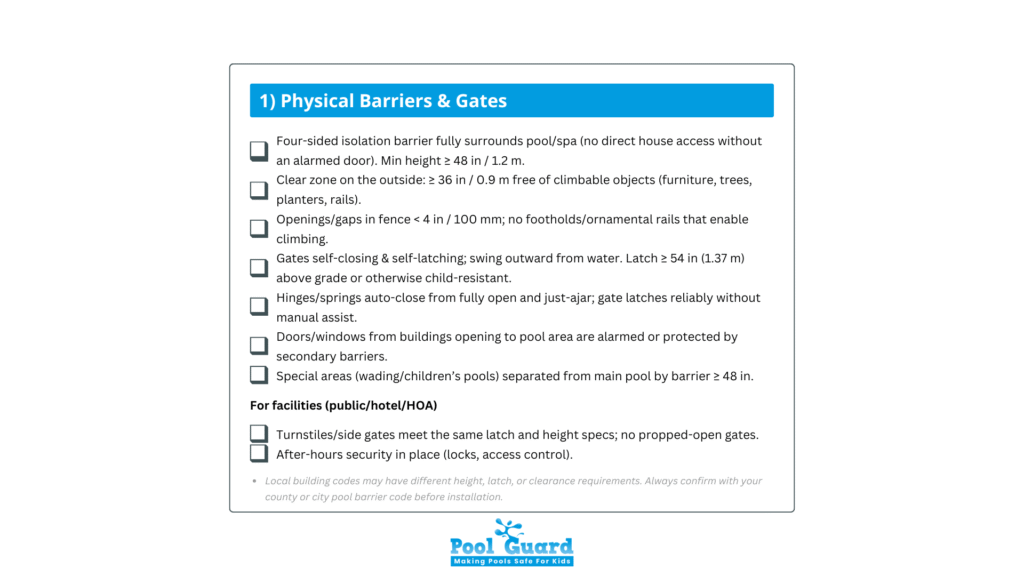
Deck surfaces require particular attention, as slip-resistant materials must meet updated coefficient standards. Check for proper drainage systems that prevent standing water, which can create hazardous conditions and breeding grounds for bacteria. Pool barriers and fencing must comply with height requirements of at least 4 feet, with self-closing and self-latching gates that open away from the pool area.
Water Quality and Chemical Balance Verification
Water quality testing forms the cornerstone of any thorough aquatic inspection. The 2024 standards emphasize continuous monitoring systems for chlorine levels, pH balance, and total alkalinity. Free chlorine levels must maintain between 1.0-3.0 ppm for pools and 2.0-5.0 ppm for spas, with pH levels strictly controlled between 7.2-7.8.
Cyanuric acid levels require careful monitoring, as excessive levels can reduce chlorine effectiveness. The updated guidelines specify maximum levels of 100 ppm for outdoor pools, with indoor pools maintaining lower concentrations. Professional pool inspection services utilize calibrated testing equipment to ensure accurate readings that meet regulatory standards.
Updated Safety Equipment Requirements
The 2024 regulations introduce new safety equipment mandates that every pool owner must understand. Emergency equipment placement follows specific distance requirements, with rescue equipment positioned no more than 300 feet from any point in the pool. Life rings, reaching poles, and first aid kits must be readily accessible and properly maintained.
For spas and hot tubs, the new requirement for visible clocks ensures bathers can monitor their exposure time, reducing risks associated with prolonged high-temperature exposure. These clocks must be clearly visible from all seating positions within the spa area.
Electrical and Mechanical Systems Compliance
Electrical safety remains paramount in pool inspections, with updated standards addressing GFCI protection for all pool-related electrical equipment. The 2024 codes require enhanced bonding and grounding systems, particularly for pools with advanced automation systems or LED lighting installations.
Pump and filtration systems must demonstrate adequate turnover rates, with residential pools requiring complete water circulation every 6-8 hours. Commercial facilities face stricter requirements, with some venues requiring turnover rates as frequent as every 30 minutes for high-bather-load areas.
Documentation and Compliance Records
Proper documentation serves as crucial evidence of compliance during official inspections. Maintain detailed logs of water testing results, equipment maintenance schedules, and any corrective actions taken. The 2024 standards emphasize digital record-keeping systems that provide timestamp verification and prevent data manipulation.
Professional pool inspection services provide comprehensive reports that satisfy regulatory requirements while identifying potential issues before they become violations. These reports should include photographic evidence, detailed measurements, and specific recommendations for addressing any deficiencies.
Regular adherence to this comprehensive inspection checklist ensures your pool remains compliant with current safety standards while providing a safe environment for all users. Remember that professional pool inspection services offer expertise in interpreting complex regulations and identifying issues that untrained eyes might miss.
No comments yet. Be the first to share your thoughts!